
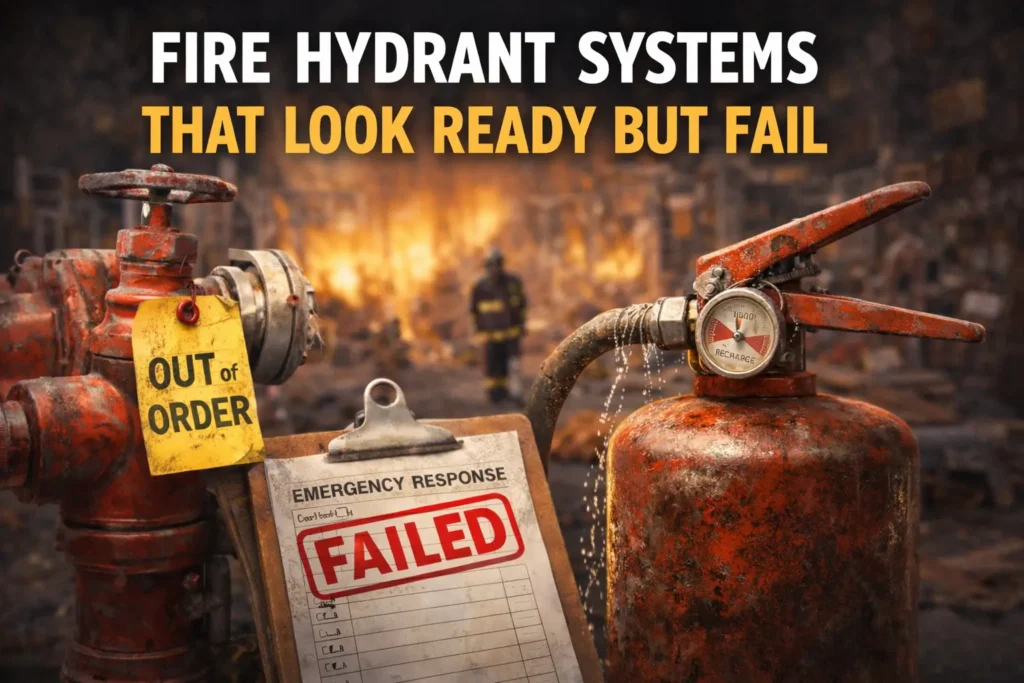
Fire Hydrant Systems That Look Ready but Fail
In many industrial facilities, fire hydrant systems look complete and compliant.
You will see:
- Red-painted pipelines
- Hydrant valves clearly labeled
- Hose reels mounted
- Fire pumps installed in dedicated rooms
Everything appears ready during inspection.
However, during real fire emergencies, these systems often fail to perform.
Water does not reach the hydrant, pressure drops suddenly, or pumps fail to start.
This creates a dangerous situation where a small, controllable fire becomes a major incident.
A hydrant system that only looks ready is not truly ready.
Real readiness depends on performance, not appearance.
What a Fire Hydrant System Must Deliver
A properly functioning hydrant system must provide:
- Immediate water supply
- Adequate pressure
- Sufficient flow rate
- Continuous operation
- Reliable response without delay
If any one of these fails, firefighting becomes ineffective.
Common Real-World Failure Scenarios
Fire Pump Failure
The most critical failure is when the fire pump does not start.
During an emergency:
- Pressure drops
- Pump should start automatically
- But nothing happens
Common causes include:
- Battery not charged
- Diesel tank empty
- Controller faults
- Manual mode left on
- Wiring issues
- Lack of testing
If the pump fails, the entire system becomes useless.
Low Water Pressure at Hydrants
Sometimes water is available, but pressure is insufficient.
This results in:
- Weak water throw
- Limited reach
- Inability to control fire
Typical causes include:
- Partially closed valves
- Pipe leakage
- Blocked strainers
- Incorrect system design
- Corrosion inside pipes
Low pressure is as dangerous as no water.
Hose Failure During Operation
Hoses may:
- Leak
- Burst
- Crack
- Become stiff
Causes include:
- Aging material
- Sun exposure
- Improper storage
- Lack of testing
A damaged hose reduces firefighting effectiveness and wastes water.
Valves Jammed or Difficult to Operate
Hydrant valves are rarely used.
Over time:
- Rust forms
- Threads seize
- Dust accumulates
During emergencies, operators may struggle to open valves, causing delay.
Hydrant Points Blocked
This is a very common issue.
Hydrants may be blocked by:
- Stored materials
- Pallets
- Vehicles
- Equipment
During emergencies, access becomes difficult and response time increases.
Empty or Inadequate Water Supply
Water tanks may:
- Be used for other purposes
- Not be refilled
- Leak
- Lack monitoring
Without sufficient water, even a working pump cannot supply the system.
Why These Failures Occur
Most failures are not due to design.
They occur due to poor maintenance and lack of responsibility.
Common reasons include:
- No regular inspection
- No testing schedule
- Lack of trained personnel
- No system ownership
- Ignoring early warning signs
Fire protection systems fail silently until they are needed.
Warning Signs Your Hydrant System Is Not Reliable
Safety officers should monitor for:
- Pump room locked and dusty
- Pressure gauges showing zero
- Corroded valves
- Cracked hoses
- Unknown water levels
- Missing inspection records
- No trained operators
These indicators suggest the system may fail during emergencies.
Real Workplace Example
In a warehouse, an electrical fault caused a fire near packaging materials.
Workers attempted to use the hydrant system.
However:
- The pump did not start
- Diesel tank was empty
- No maintenance had been performed
By the time external firefighters arrived, the fire had spread significantly.
Investigation revealed:
- No testing for six months
- No maintenance records
- No assigned responsibility
The system appeared ready but failed completely.
Fire Hydrant System Maintenance Checklist
Weekly Checks
- Run fire pump in auto and manual mode
- Check diesel level and battery
- Verify pressure readings
- Ensure jockey pump operation
Monthly Checks
- Operate hydrant valves
- Inspect hoses for damage
- Test hose reels
- Remove obstructions
- Check water tank levels
Quarterly Checks
- Conduct flow testing
- Measure pressure and discharge
- Inspect strainers
- Clean pump room
Annual Checks
- Perform hydrostatic hose testing
- Conduct pump performance test
- Lubricate valves
- Full system audit
- Third-party inspection
Importance of Functional Testing
Visual inspection is not sufficient.
Hydrant systems must be tested under real conditions:
- Full flow operation
- Pressure verification
- Valve performance
- Pump response
Only testing ensures reliability.
Industry Guidance and Standards
According to the National Fire Protection Association, water-based fire protection systems such as hydrants must be regularly inspected, tested, and maintained to ensure reliable performance during emergencies.
NFPA guidance emphasizes:
- Routine pump testing
- System flow verification
- Maintenance of hoses and valves
- Immediate correction of faults
For detailed guidance, refer to:
👉 https://www.nfpa.org/News-and-Research/Publications-and-media/NFPA-Journal
Role of Safety Officers
A hydrant system requires clear ownership.
Safety officers must:
- Conduct inspections
- Maintain records
- Identify defects
- Ensure corrective actions
- Train personnel
Without responsibility, systems degrade over time.
Practical Steps to Improve Reliability
- Maintain a logbook for all tests
- Keep pump room clean and accessible
- Display operating instructions near hydrants
- Train workers regularly
- Conduct mock drills
- Tag faulty equipment immediately
These steps significantly improve system performance.
Conclusion
A fire hydrant system that only looks ready is a serious risk.
Real safety depends on:
- Regular testing
- Proper maintenance
- Adequate water supply
- Trained personnel
During a fire, there is no time for troubleshooting.
The system must work instantly.
Fire safety is not about installation.
It is about performance when it matters most.
For a complete understanding, read our full Workplace Fire Safety Guide.
Complete Workplace Fire Safety Guide (2026): Prevention, Equipment, Risk & Response
Fire Hydrant System Explained, How It Works, Why It Fails, and How to Keep It Fire Ready
Components of a Fire Hydrant System, How Each Part Fails or Saves a Fire Response
How to Operate a Fire Hydrant Safely During an Emergency
Fire Pump Room Layout and Requirements Explained Simply and Practically
Fire Hydrant Testing Procedure: Why It Matters and How It Prevents Fire System Failure
Frequently Asked Questions
How often should hydrant systems be tested
Pumps should be tested weekly and full system checks conducted monthly and annually.
Can new systems fail
Yes. Without testing and maintenance, even new systems can fail.
Who is responsible for maintenance
Safety officers or designated fire safety teams.
What is the most common failure
Fire pump not starting due to lack of testing.
Are mock drills necessary
Yes. They ensure workers know how to respond during emergencies.
