
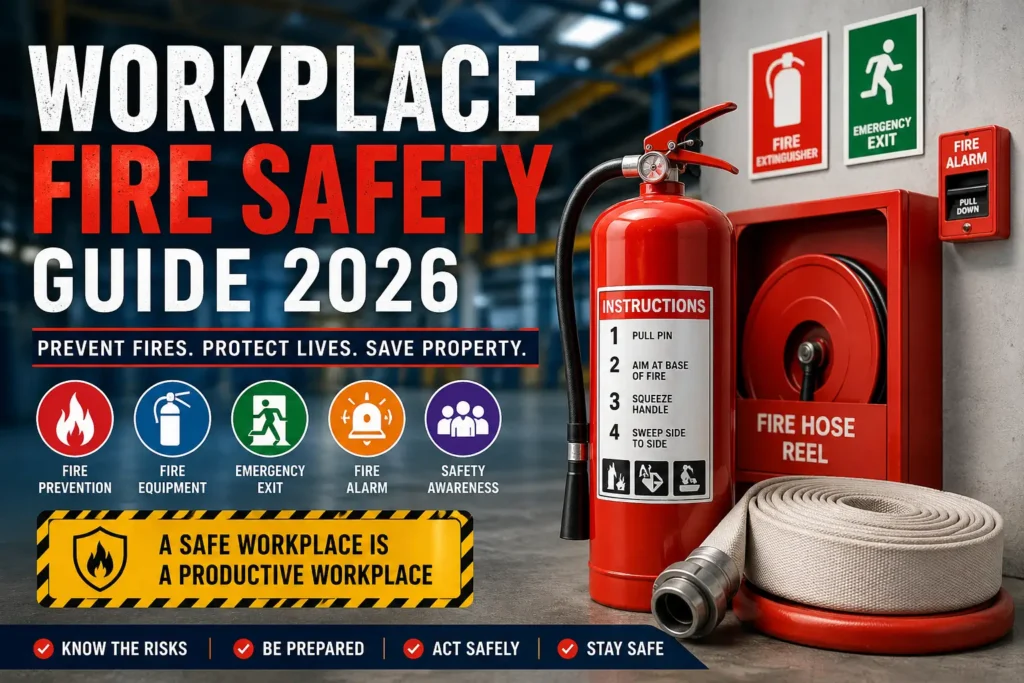
Complete Workplace Fire Safety Guide (2026): Prevention, Equipment, Risk & Response
Fire safety in workplaces is one of the most critical aspects of occupational health and safety management. A fire incident can lead to severe consequences, including injuries, fatalities, property damage, production loss, and long-term business disruption.
Many organizations assume that installing fire extinguishers and displaying safety signs is enough. However, real fire safety is far more complex. It depends on proper understanding, continuous monitoring, and practical implementation of safety measures.
Modern workplaces face increasing fire risks due to higher electrical consumption, use of flammable materials, continuous operations, and complex machinery. Without proper control measures, even a small spark can quickly develop into a major fire.
This guide provides a practical and detailed understanding of workplace fire safety, helping safety professionals, supervisors, and workers identify risks and prevent incidents.
Understanding Fire and the Fire Triangle
Fire is a chemical reaction known as combustion. It occurs when three essential elements combine in the right conditions. This concept is known as the fire triangle.
Elements of the Fire Triangle
The three elements required for fire are:
- Heat
- Fuel
- Oxygen
If any one of these elements is removed, the fire will stop.
Heat Sources in Workplaces
Heat is the ignition source that starts a fire. Common workplace heat sources include:
- Electrical faults and short circuits
- Overloaded circuits and equipment
- Friction from rotating machinery
- Welding, cutting, and grinding operations
- Hot surfaces and engines
In many incidents, heat sources are not identified early, which leads to unexpected fires.
Fuel Sources in Workplaces
Fuel is anything that can burn. In workplaces, fuel can exist in multiple forms:
- Solid materials such as paper, wood, plastic, and textiles
- Flammable liquids such as petrol, diesel, solvents, and paints
- Gases such as LPG and acetylene
- Combustible dust in industries like cement, flour, and metal processing
Even small amounts of fuel can contribute to fire spread if not controlled.
Oxygen and Its Role
Oxygen is present in the air, and it supports combustion. In enclosed spaces, oxygen levels can increase fire intensity. Ventilation systems and airflow can also influence how quickly a fire spreads.
Understanding the fire triangle helps in designing effective fire prevention strategies.
Stages of Fire Development
Fire does not start as a large incident. It develops in stages, and early intervention can prevent major damage.
Ignition Stage
This is the initial stage where a heat source comes into contact with fuel. At this stage, the fire is small and can be easily controlled if detected early.
Growth Stage
During this stage, the fire begins to spread. Heat increases, and smoke is produced. The surrounding materials start to catch fire, increasing the risk.
Fully Developed Stage
At this stage, the fire reaches maximum intensity. Flames, heat, and smoke are at their peak. Fire becomes difficult to control and requires professional firefighting support.
Decay Stage
In this stage, the fire begins to reduce as fuel is consumed. However, the area remains dangerous due to high temperatures and toxic gases.
Understanding these stages helps in planning detection and response systems.
Classification of Fires in Workplaces
Different types of fires require different extinguishing methods. Using the wrong method can make the situation worse.
Class A Fires
These involve solid combustible materials such as:
- Wood
- Paper
- Cloth
- Rubber
These are common in offices, warehouses, and construction sites.
Class B Fires
These involve flammable liquids such as:
- Petrol
- Diesel
- Paints
- Solvents
These fires spread quickly and are difficult to control.
Class C Fires
These involve flammable gases such as:
- LPG
- Propane
- Acetylene
Gas fires can lead to explosions if not controlled properly.
Electrical Fires
These involve electrical equipment such as:
- Panels
- Motors
- Wiring
Water should not be used on electrical fires.
Class D Fires
These involve combustible metals such as magnesium and sodium, which are found in specialized industries.
Understanding fire classification is essential for selecting the correct firefighting method.
Why Fire Safety Is Often Ignored
Despite awareness, many workplaces fail to manage fire risks effectively.
Common Reasons
- Overconfidence in existing systems
- Lack of proper training
- Poor supervision
- Ignoring minor hazards
- Delaying maintenance
In many cases, small warning signs are ignored until a serious incident occurs.
Real Workplace Scenario
In one industrial facility, a small electrical spark was observed in a panel. The issue was considered minor and was not repaired immediately.
Over time:
- Heat increased inside the panel
- Insulation materials started burning
- Fire spread to nearby cables
This resulted in major equipment damage and production loss.
This example highlights how small issues can lead to serious incidents when ignored.
Fire Extinguishers in the Workplace
Fire extinguishers are one of the most common and important tools used for controlling small fires in workplaces. However, their effectiveness depends on correct selection, proper placement, and trained usage.
Many workplaces install extinguishers only to meet compliance requirements, but during real emergencies, employees often do not know how to use them correctly.
Types of Fire Extinguishers
Understanding different types of extinguishers is essential for effective fire control.
Water Fire Extinguisher
Water extinguishers are used for Class A fires involving solid materials such as wood, paper, and cloth. They work by cooling the burning material and reducing temperature.
They should never be used on electrical fires or flammable liquid fires because they can spread the fire or cause electric shock.
CO₂ Fire Extinguisher
Carbon dioxide extinguishers are used for electrical fires and some liquid fires. They work by displacing oxygen and stopping combustion.
They do not leave residue, which makes them suitable for offices and server rooms. However, they are less effective in open areas where gas can disperse quickly.
Foam Fire Extinguisher
Foam extinguishers are used for flammable liquid fires. They form a blanket over the liquid surface, preventing oxygen from reaching the fuel and stopping re-ignition.
They are commonly used in fuel storage areas and workshops.
Dry Powder Fire Extinguisher
Dry powder extinguishers are multipurpose and can be used for Class A, B, and C fires. They interrupt the chemical reaction of fire.
Although effective, they reduce visibility and can create breathing difficulty in enclosed spaces.
PASS Technique for Using Fire Extinguishers
Employees should be trained to use extinguishers using the PASS method:
Pull
Pull the safety pin to unlock the extinguisher.
Aim
Aim the nozzle at the base of the fire, not the flames.
Squeeze
Press the handle to release the extinguishing agent.
Sweep
Move the nozzle from side to side to cover the fire area.
Proper training ensures quick and effective response.
Common Mistakes While Using Fire Extinguishers
In real incidents, many extinguishers fail not because of equipment issues, but because of human mistakes.
Using the Wrong Extinguisher
Selecting the incorrect type can worsen the fire, especially in electrical or liquid fires.
Standing Too Close or Too Far
Standing too close can be dangerous, while standing too far reduces effectiveness.
Not Targeting the Base of Fire
Spraying flames instead of the base does not stop combustion.
Panic and Delay
People often hesitate or panic, which delays response and allows fire to grow.
Fighting Large Fires
Extinguishers are only meant for small fires. Trying to control a large fire can be life-threatening.
Major Causes of Workplace Fires (Detailed)
Understanding causes helps in prevention.
Electrical Hazards
Electrical systems are one of the leading causes of workplace fires.
Common issues include:
- Overloaded circuits
- Loose connections
- Damaged insulation
- Poor maintenance
Regular inspection is essential to prevent electrical fires.
Hot Work Activities
Hot work includes:
- Welding
- Cutting
- Grinding
These activities generate sparks that can ignite nearby materials.
Without proper controls such as permits, supervision, and fire watch, hot work becomes highly dangerous.
Poor Housekeeping
Poor housekeeping creates ideal conditions for fire.
Examples include:
- Accumulation of waste materials
- Oil-soaked rags
- Dust deposits
Dust is especially dangerous in industries because it can lead to explosions.
Improper Storage of Flammable Materials
Flammable liquids and gases must be stored properly.
Risks increase when:
- Containers are not sealed
- Materials are stored near heat sources
- Ventilation is poor
Human Factors
Human behavior plays a major role in fire incidents.
Common issues include:
- Ignoring safety procedures
- Lack of awareness
- Overconfidence
- Carelessness
Training and supervision are necessary to control human-related risks.
Practical Fire Prevention Strategies
Fire prevention is always better than firefighting.
Control Ignition Sources
- Regular inspection of electrical systems
- Maintenance of machinery
- Monitoring hot work activities
Control Fuel Sources
- Proper storage of flammable materials
- Immediate cleanup of spills
- Safe waste disposal
Improve Housekeeping Standards
A clean workplace reduces fire risk significantly.
- Keep work areas organized
- Remove unnecessary materials
- Maintain clear pathways
Implement Permit-to-Work System
Hot work and high-risk activities should be controlled through permit systems.
This ensures:
- Hazard identification
- Proper supervision
- Safety precautions
Conduct Regular Inspections
Routine inspections help identify hazards before they become serious.
- Electrical inspections
- Storage checks
- Equipment monitoring
Hidden Fire Hazards in Workplaces
Some fire risks are not easily visible but can be very dangerous.
Temporary Wiring
Temporary electrical setups often become permanent, increasing risk.
Overheated Equipment
Machines that run continuously may overheat and ignite nearby materials.
Dust Accumulation
Fine dust particles can ignite and cause explosions.
Static Electricity
Static charges can ignite flammable vapors.
Importance of Fire Safety Training
Even the best systems fail without trained people.
Employees must know:
- Types of fire
- How to use extinguishers
- Emergency procedures
- When to evacuate
Training should include practical demonstrations and drills.
Fire Safety Awareness in Daily Work
Fire safety should not be limited to audits and inspections.
It should be part of daily work activities.
Workers should:
- Report hazards immediately
- Follow safe practices
- Avoid shortcuts
- Stay alert
Fire Protection Systems in Workplaces
Fire protection systems are designed to detect, control, and suppress fire before it spreads. However, in many workplaces, these systems are installed but not properly understood or maintained.
Fire Hydrant System
A fire hydrant system provides a reliable water supply for firefighting. It includes:
- Hydrant valves
- Piping network
- Fire hoses and branch pipes
These systems are mainly used by trained personnel and fire departments. For effective operation, hydrant systems must be regularly tested for pressure and flow.
Hose Reel System
Hose reels are used for first-response firefighting. They are easier to operate compared to hydrants and can be used by trained workers.
Common issues include:
- Hose leakage
- Blocked access
- Low water pressure
Regular inspection is required to ensure readiness.
Fire Sprinkler System
Sprinkler systems automatically activate when a certain temperature is reached.
Advantages include:
- Early fire control
- Reduced fire spread
- Minimal human intervention
However, sprinklers fail when:
- Water supply is inadequate
- System valves are closed
- Maintenance is ignored
Fire Alarm and Detection System
Fire alarm systems provide early warning to occupants.
Components include:
- Smoke detectors
- Heat detectors
- Manual call points
- Alarm panels
Common problems include:
- Disabled alarms due to nuisance
- Battery failure
- Poor maintenance
A non-functional alarm system can delay evacuation and increase risk.
Fire Pump System
Fire pumps ensure adequate water pressure in firefighting systems.
They include:
- Main pump
- Jockey pump
- Diesel pump
Failure of fire pumps during emergencies is often due to lack of testing under actual load conditions.
Emergency Lighting System
Emergency lights help occupants evacuate safely during power failure.
They should be:
- Installed in exit routes
- Tested regularly
- Maintained properly
Why Fire Protection Systems Fail in Real Situations
Despite installation, many systems fail due to:
- Lack of maintenance
- No functional testing
- Poor understanding of operation
- Blocked access
- Overconfidence
Systems should be tested under real conditions, not just visually inspected.
Fire Risk Assessment (Detailed Practical Approach)
Fire risk assessment is one of the most important tools in fire safety management.
It involves identifying hazards and implementing control measures.
Step 1: Identify Fire Hazards
- Ignition sources
- Fuel sources
- Oxygen supply
Step 2: Identify People at Risk
- Workers
- Visitors
- Contractors
Special attention should be given to vulnerable individuals.
Step 3: Evaluate and Control Risks
- Remove or reduce hazards
- Install fire protection systems
- Implement safe work practices
Step 4: Record Findings
Maintain proper documentation for review and audits.
Step 5: Review and Update
Risk assessments must be updated when:
- New equipment is installed
- Layout changes
- Processes change
Emergency Response Planning
An effective emergency plan ensures quick and safe action during fire incidents.
Evacuation Plan
- Clearly marked exit routes
- Emergency exit doors
- Assembly points
Employees must know evacuation routes.
Fire Alarm System
Alarms must:
- Be audible and visible
- Activate immediately
- Be tested regularly
Roles and Responsibilities
- Fire wardens guide evacuation
- Supervisors ensure accountability
- Emergency teams handle initial response
Communication System
- Internal communication between teams
- External communication with fire services
Real Case Study 1 (Electrical Fire)
In a manufacturing unit, a minor electrical fault was noticed but ignored.
Over time:
- Heat increased inside the panel
- Insulation materials ignited
- Fire spread through cable trays
The fire caused major production loss.
Root Cause:
Lack of preventive maintenance and delayed action.
Real Case Study 2 (Hot Work Incident)
During welding operations, sparks fell on nearby combustible materials.
- Fire started in storage area
- Spread rapidly due to packaging materials
- Workers were not prepared
Root Cause:
Poor housekeeping and lack of fire watch.
Real Case Study 3 (Dust Explosion Risk)
In a processing unit:
- Dust accumulated over time
- Ignition source triggered combustion
- Resulted in sudden fire spread
Root Cause:
Lack of cleaning and monitoring.
Workplace Fire Safety Checklist
Daily Checklist
- Check for overheating equipment
- Remove waste materials
- Observe unsafe conditions
Weekly Checklist
- Inspect electrical systems
- Check storage areas
- Verify fire equipment accessibility
Monthly Checklist
- Inspect fire extinguishers
- Test alarm systems
- Review emergency exits
Periodic Checklist
- Conduct fire drills
- Review risk assessments
- Test fire protection systems
Building a Strong Fire Safety Culture
A strong safety culture ensures fire risks are controlled effectively.
Key Elements
- Employee awareness
- Management commitment
- Regular training
- Hazard reporting
Fire safety must be part of everyday work, not just audits.
Industry Standards and Guidance
Workplaces should follow internationally recognized standards such as those provided by the National Fire Protection Association.
These standards emphasize:
- Regular inspection and testing
- Proper system design
- Employee training
- Continuous improvement
For detailed guidance, refer to:
👉 https://www.nfpa.org/
Why Fires Occur Even in “Safe” Workplaces
Many workplaces believe they are safe because:
- Equipment is installed
- Procedures are documented
However, fires still occur due to:
- Changing conditions
- Human behavior
- System failures
- Poor maintenance
Fire depends on real conditions, not documentation.
Conclusion
Fire safety is not achieved by simply installing equipment or following procedures.
It requires:
- Understanding fire behavior
- Identifying real risks
- Maintaining systems
- Training employees
- Continuous monitoring
A truly safe workplace is one where fire risks are actively managed and controlled.
Fire Prevention Rules That Are Followed Only on Paper
Common Fire Safety Mistakes in Workplaces
Even well-managed workplaces make mistakes that increase fire risk. These mistakes are often repeated because they do not immediately result in incidents.
One of the most common mistakes is treating fire safety as a compliance activity rather than a practical control system. Equipment is installed, records are maintained, but real conditions are not monitored.
Another major mistake is ignoring small warning signs such as overheating equipment, unusual smells, or minor sparks. These early indicators are often the starting point of major fire incidents.
Poor placement of fire extinguishers is also a frequent issue. In many workplaces, extinguishers are blocked, hidden, or installed in locations that are not easily accessible during emergencies.
Lack of training is another critical gap. Employees may know that fire extinguishers exist, but they are not confident in using them under pressure.
Correcting these mistakes requires regular observation, training, and continuous improvement in safety practices.
Importance of Regular Fire Drills
Fire drills are an essential part of workplace safety, yet they are often treated as a formality.
A properly conducted fire drill helps employees understand evacuation routes, assembly points, and emergency procedures. It also helps identify gaps in planning, such as blocked exits, confusion in communication, or delays in response.
During real emergencies, people react based on their level of preparedness. Without drills, panic and confusion are common, which can increase risk.
Fire drills should be conducted periodically and should involve realistic scenarios. After each drill, feedback should be collected and improvements should be implemented.
Role of Management in Fire Safety
Fire safety is not only the responsibility of safety officers. Management plays a key role in ensuring that safety systems are effective.
Management must ensure that:
- Adequate resources are provided for safety
- Maintenance is carried out regularly
- Employees are trained properly
- Safety is prioritized over production pressure
A strong commitment from management creates a positive safety culture where employees take fire risks seriously.
Final Practical Tip for Workplaces
Fire safety improves when workers are encouraged to report small issues without fear.
Simple actions such as reporting a loose wire, cleaning dust, or correcting unsafe storage can prevent major incidents.
Fire prevention is built on daily discipline, not just emergency response.
Frequently Asked Questions
What is the main cause of workplace fires
Electrical faults and human error are the most common causes.
How often should fire systems be tested
Regular testing should be done weekly, monthly, and annually.
Can fire extinguishers control all fires
No, they are only effective for small fires.
Why do fire systems fail
Due to poor maintenance and lack of training.
What is the best way to prevent fire
Control ignition sources, manage fuel, and improve awareness.
