
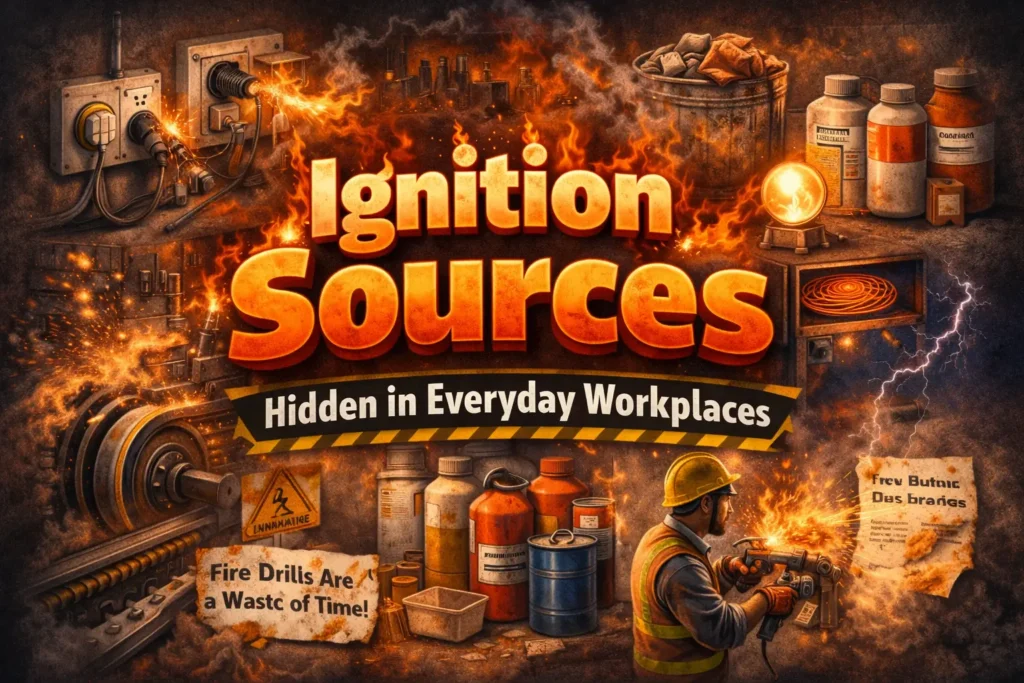
Hidden Ignition Sources in Everyday Workplaces
For globally recognized fire safety guidance on ignition control and fire prevention, refer to educational resources from the National Fire Protection Association
Many workplace fires do not start from obvious flames or sparks. Instead, they originate from hidden ignition sources that go unnoticed during daily operations. These sources often exist in plain sight, embedded within routine tasks, equipment, and common work practices.
Because these ignition sources are familiar, employees rarely recognize them as fire hazards. This false sense of safety increases the likelihood of accidental fires, especially in offices, factories, warehouses, construction sites, and commercial buildings.
Understanding these hidden ignition sources is essential for effective fire prevention, risk assessment, and workplace safety management.
What Is an Ignition Source?
An ignition source is anything that provides sufficient heat, energy, or spark to initiate combustion. When combined with fuel and oxygen, an ignition source completes the fire triangle and allows a fire to start.
Ignition sources can be electrical, mechanical, chemical, or thermal in nature. Many of them are generated unintentionally during normal work activities.
Electrical Ignition Sources Often Overlooked
Overloaded Power Sockets
Plugging multiple devices into a single outlet is common in offices and control rooms. Overloading causes excessive heat buildup inside wiring and sockets, increasing the risk of electrical fires.
Loose Electrical Connections
Loose terminals, worn plugs, and damaged cables generate resistance, which produces heat. This heat can ignite surrounding insulation or nearby combustible materials.
Temporary Electrical Extensions
Temporary wiring used for events, maintenance, or construction often lacks proper protection. These cables are frequently damaged, crushed, or exposed to moisture.
Faulty Chargers and Adapters
Low-quality chargers and adapters overheat easily and are a common cause of workplace fires, especially when left plugged in continuously.
Mechanical Ignition Sources in Daily Operations
Friction from Moving Parts
Bearings, belts, conveyor rollers, and rotating shafts can overheat due to friction, misalignment, or lack of lubrication.
Overheated Machinery
Motors, compressors, and pumps generate heat during operation. Poor ventilation or blocked cooling systems can cause surface temperatures to rise to ignition levels.
Sparks from Metal Work
Grinding, cutting, and drilling operations produce sparks that can travel several meters and ignite dust, vapors, or stored materials.
Chemical and Process-Related Ignition Sources
Exothermic Chemical Reactions
Certain chemicals release heat during reactions. Improper mixing or storage can lead to spontaneous ignition.
Oxidizing Agents
Chemicals such as nitrates, peroxides, and bleaching agents supply oxygen, intensifying fires even without open flames.
Improper Chemical Storage
Storing incompatible chemicals together increases the risk of heat generation, gas release, and fire.
Thermal Ignition Sources Hidden in Plain Sight
Hot Surfaces
Boilers, ovens, heaters, exhaust pipes, and steam lines can ignite combustible materials placed too close.
Lighting Fixtures
High-intensity lights, halogen lamps, and faulty fittings can overheat and ignite nearby materials such as paper or fabric.
Cooking and Pantry Areas
Office kitchens often contain ignition sources like electric kettles, microwaves, and gas stoves, which are rarely included in formal fire risk assessments.
Static Electricity as a Silent Ignition Source
Static electricity buildup occurs during material handling, especially with powders, plastics, and flammable liquids. A single static discharge can ignite vapors or dust clouds.
This risk is common in warehouses, paint shops, and chemical storage areas.
Human Behavior as an Ignition Source
Smoking in Unauthorized Areas
Discarded cigarette butts remain hot long enough to ignite paper, waste, or flammable liquids.
Hot Work Activities
Welding, cutting, and brazing introduce intense heat and sparks. Without proper permits and controls, hot work is a major cause of workplace fires.
Poor Housekeeping
Accumulated dust, oily rags, and waste materials increase fuel availability near ignition sources.
Why Hidden Ignition Sources Are Dangerous
Hidden ignition sources are dangerous because:
- They are part of routine work
- Employees underestimate their risk
- They are rarely reported as hazards
- They are not always covered in safety training
- They can trigger fires suddenly without warning
Recognizing these sources is critical to preventing unexpected fire incidents.
How to Control Hidden Ignition Sources
Effective control measures include:
- Regular electrical inspections and maintenance
- Proper machine lubrication and alignment
- Strict hot-work permit systems
- Good housekeeping practices
- Safe chemical storage and labeling
- Use of anti-static grounding and bonding
- Employee awareness and training
Fire prevention begins with eliminating or controlling ignition sources before they combine with fuel and oxygen.
Ignition Sources in Fire Risk Assessment
Identifying ignition sources is a key step in fire risk assessment. Safety officers must evaluate:
- Electrical equipment condition
- Heat-producing processes
- Chemical usage
- Human activities
- Environmental conditions
This assessment helps prioritize control measures and reduce overall fire risk.
Frequently Asked Questions (FAQs)
Are ignition sources always visible?
No. Many ignition sources such as overheating cables or static discharge are invisible.
Which ignition source causes most workplace fires?
Electrical faults and hot work activities are among the most common causes.
Can static electricity really cause fires?
Yes. Static sparks can ignite flammable vapors and dust clouds.
How often should ignition sources be reviewed?
They should be reviewed regularly and whenever work processes change.
Is employee behavior an ignition source?
Yes. Unsafe behavior such as smoking or improper hot work is a major fire risk.
Conclusion
Ignition sources are not limited to flames and sparks. They are hidden within everyday workplace activities, equipment, and behaviors. Ignoring these sources allows fire risks to grow unnoticed until an incident occurs.
By identifying hidden ignition sources and implementing proper control measures, organizations can significantly reduce fire hazards and protect lives and property.
Fire prevention starts with awareness, vigilance, and responsibility.
Why Fire Starts Even When All Safety Rules Are Followed
Fire Triangle Explained, Practical Fire Risk Control Guide for Workplaces
Heat Sources in Industrial Fires, Where Ignition Really Starts and How to Stop It
Fuel Types and Their Fire Behaviour, Why Different Fuels Burn Differently and How Fires Escalate
Role of Oxygen in Combustion, How Oxygen Makes Fires Grow and Why It Becomes Dangerous
