
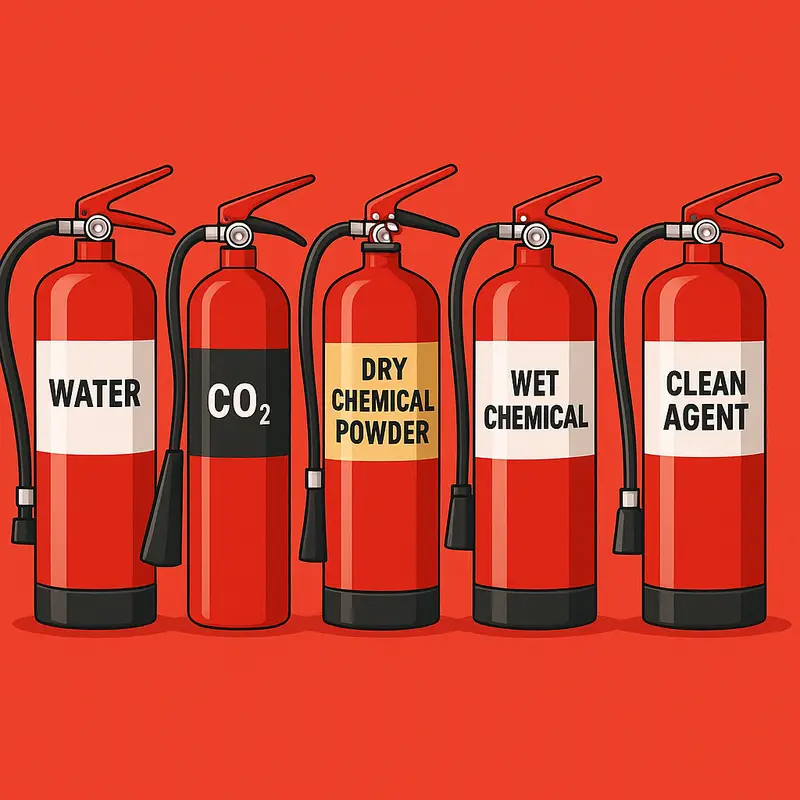
Types of Fire Extinguishers Explained, How to Select the Right One for Real Workplace Fires
Choosing the wrong fire extinguisher during an emergency can make a small fire uncontrollable within seconds. During site inspections, audits, and emergency drills, one common issue repeatedly appears. Fire extinguishers are installed, but workers do not know which one to use, where to use it, or why certain extinguishers are dangerous in the wrong situation.
This guide explains the types of fire extinguishers from a practical workplace perspective, focusing on selection, common mistakes, inspection findings, and real use scenarios, not just definitions.
Why Correct Fire Extinguisher Selection Matters
Fire extinguishers are designed for specific fire conditions. Using the wrong type can:
- Spread the fire
- Cause electric shock
- Trigger explosions
- Injure the user
Many fire incidents escalate not because extinguishers were unavailable, but because the wrong extinguisher was used.
Understanding Fire Classes Before Selecting an Extinguisher
Before discussing extinguisher types, it is essential to understand fire classification, as this directly affects extinguisher selection.
- Class A: Solid combustibles such as wood, paper, cloth, and plastics
- Class B: Flammable liquids like petrol, diesel, oils, and solvents
- Class C: Flammable gases such as LPG, propane, and methane
- Class D: Combustible metals including magnesium, sodium, and aluminum
- Class K or F: Cooking oils and fats used in commercial kitchens
- Electrical Fires: Energized electrical equipment
Each extinguisher is manufactured to control specific classes only.
Water Fire Extinguishers, Where They Are Safe and Where They Are Dangerous
Water extinguishers work by cooling the burning material below its ignition temperature.
Where Water Extinguishers Are Suitable
- Offices with paper and furniture
- Classrooms
- Storage areas with cardboard or wood
- Class A solid combustible fires
Where Water Extinguishers Must Never Be Used
- Electrical panels or live equipment
- Flammable liquid spills
- Kitchens with hot oil
- Gas related fires
Common inspection failure: Water extinguishers installed near electrical panels.
Color Code: Red
Foam Fire Extinguishers, Effective but Often Misused
Foam extinguishers work by smothering flammable liquids and preventing vapor release.
Suitable Applications
- Fuel storage areas
- Workshops handling oils and solvents
- Warehouses with mixed Class A and B risks
Limitations
- Not safe on live electrical equipment unless tested
- Not suitable for kitchen oil fires
- Incorrect application can break the foam blanket
Common mistake: Spraying foam directly into burning liquid, causing splashing.
Color Code: Cream
CO₂ Fire Extinguishers, Ideal for Electrical Fires but Limited
CO₂ extinguishers displace oxygen around the fire and leave no residue, making them ideal for electrical equipment.
Suitable Applications
- Electrical control panels
- Server rooms
- UPS and battery rooms
- Laboratories
Key Limitations
- Ineffective on deep seated Class A fires
- Very short discharge time
- Not suitable for outdoor use due to wind
Common safety risk: Cold burns from touching the discharge horn.
Color Code: Black
Dry Chemical Powder Extinguishers, Powerful but Messy
Dry chemical powder extinguishers interrupt the chemical chain reaction of fire.
Suitable Applications
- Industrial plants
- Gas cylinder storage areas
- Fuel handling locations
- Mixed fire risk environments
Limitations
- Leaves heavy residue
- Can damage sensitive electronics
- Reduces visibility during discharge
Common inspection finding: DCP used where CO₂ or clean agent was required.
Color Code: Blue
Wet Chemical Extinguishers, Essential for Commercial Kitchens
Wet chemical extinguishers are designed specifically for hot cooking oil fires.
Suitable Applications
- Deep fat fryers
- Commercial kitchens
- Food processing units
They work through saponification, creating a foam layer that cools and seals the oil surface.
Limitations
- Not suitable for electrical fires
- Limited to kitchen environments
Color Code: Yellow
Clean Agent Fire Extinguishers, Protecting Sensitive Equipment
Clean agent extinguishers are used where no residue is acceptable.
Suitable Applications
- Data centers
- Control rooms
- Medical facilities
- Laboratories
Limitations
- Higher cost
- Requires professional refilling
Color Code: Green
Class D Fire Extinguishers, For Metal Fires Only
Metal fires require special powders and must never be fought with common extinguishers.
Suitable Applications
- Metal fabrication shops
- Laboratories handling reactive metals
- Foundries and machining units
Using water or CO₂ on metal fires can cause violent reactions.
According to OSHA portable fire extinguisher standards, workplaces must select and maintain extinguishers based on fire class and hazard type.
Practical Fire Extinguisher Selection Checklist
During site inspections, use this checklist:
- Electrical equipment present → CO₂ or clean agent
- Cooking oils present → Wet chemical
- Flammable liquids stored → Foam or DCP
- Office environment → Water or CO₂
- Industrial mixed risk → DCP with additional CO₂
How to Use a Fire Extinguisher Safely
The PASS method should always be followed:
- Pull the pin
- Aim at the base
- Squeeze the handle
- Sweep side to side
Firefighting should only be attempted if:
- Fire is small
- Exit route is clear
- Proper extinguisher is available
- User is trained
Inspection and Maintenance, A Major Compliance Requirement
Fire extinguishers must be:
- Visually inspected monthly
- Serviced annually
- Hydro tested as per manufacturer guidelines
Unmaintained extinguishers are a common cause of inspection non compliance.
Common Real World Mistakes Seen on Sites
- Installing wrong extinguisher type
- Obstructed extinguisher access
- Missing inspection tags
- Staff not trained on selection
- Using one extinguisher type for all risks
These mistakes turn safety equipment into a false sense of protection.
Conclusion
Fire extinguishers are only effective when the right type is installed, correctly maintained, and properly understood. Selection should always be based on fire risk, not convenience. By matching extinguisher type to hazard, workplaces can control fires safely during their early stages and prevent escalation.
Electrical Fire Safety: Causes, Controls, and Prevention Measures
Water Extinguisher: Uses and Limitations
Foam Fire Extinguishers and AFFF Explained: Working, Types, Uses, and Limitations
CO₂ Fire Extinguisher: Working Principle, Uses, Limitations, and Industrial Applications
Dry Chemical Powder DCP Fire Extinguisher: Full Guide on Types, Working, Uses, and Limitations
