
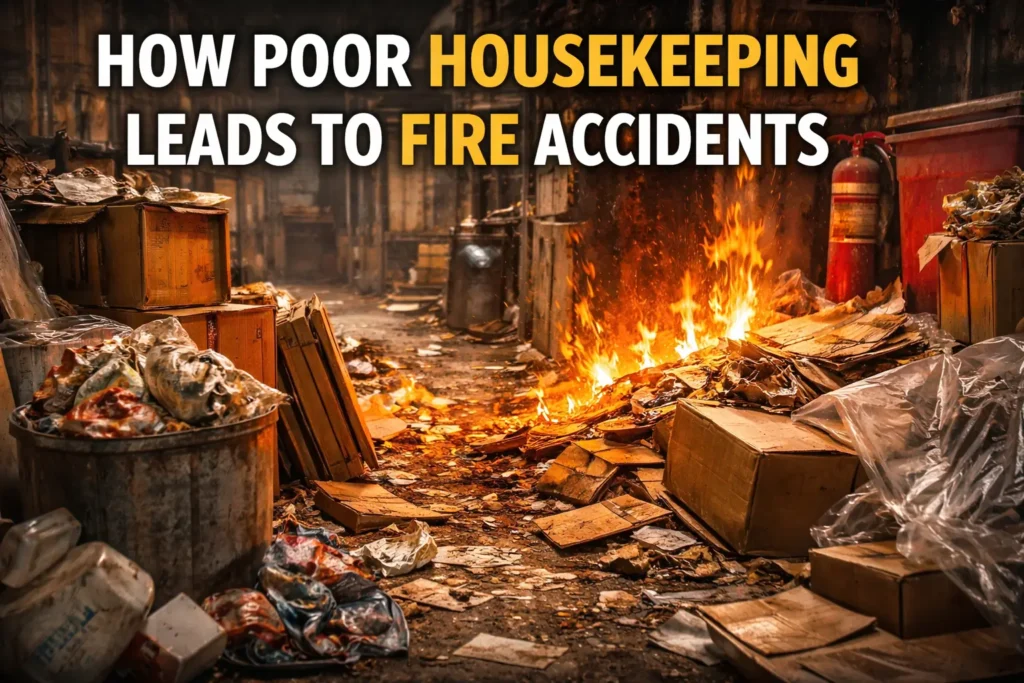
How Poor Housekeeping Leads to Fire Accidents
Housekeeping is often misunderstood as a cleanliness issue rather than a fire safety requirement. In reality, poor housekeeping is one of the most common hidden causes of fire accidents in industries, warehouses, commercial buildings, and construction sites.
Many serious fires have not started due to equipment failure or major process hazards, but because combustible materials were allowed to accumulate where they should not have been.
This article explains how poor housekeeping creates fire risks, the typical mistakes seen in workplaces, real-world examples, and practical measures to prevent fire accidents caused by neglecting housekeeping.
What Is Housekeeping in Fire Safety?
In fire safety, housekeeping refers to:
• proper storage of materials
• removal of waste and scrap
• keeping work areas clear
• controlling combustible accumulation
• maintaining clear access to fire equipment and exits
Good housekeeping reduces fuel availability, which is one side of the fire triangle.
Why Poor Housekeeping Is a Serious Fire Hazard
Poor housekeeping increases fire risk because it:
• provides easily ignitable fuel
• allows rapid fire spread
• hides ignition sources
• blocks firefighting access
• delays emergency response
A small spark can turn into a major fire when fuel is uncontrolled.
Common Housekeeping Issues That Cause Fires
1. Accumulation of Combustible Waste
Waste materials such as:
• paper and cardboard
• wooden pallets
• packaging materials
• plastic sheets
• cloth and rags
are often stored temporarily but forgotten.
These materials ignite easily and allow fires to spread rapidly.
2. Improper Storage of Flammable Liquids
Poor housekeeping often results in:
• open containers
• leaking cans
• unlabelled bottles
• storage near heat sources
Flammable vapors can travel long distances and ignite from distant ignition sources.
3. Oily Rags and Spontaneous Heating
Oily or grease-soaked rags are extremely dangerous.
They can:
• generate heat internally
• undergo spontaneous combustion
• ignite without any external spark
Many workshop and maintenance fires start this way.
4. Dust and Powder Accumulation
Combustible dust from materials such as:
• wood
• flour
• coal
• metal powders
can accumulate on surfaces.
Dust layers can ignite easily and cause flash fires or explosions when disturbed.
5. Blocked Electrical Panels and Equipment
Housekeeping failures often lead to:
• materials stacked in front of panels
• blocked switchboards
• restricted ventilation
Overheating and short circuits become more likely under these conditions.
6. Obstructed Fire Exits and Escape Routes
Temporary storage and clutter can block:
• exit doors
• corridors
• staircases
• fire doors
This not only increases fire risk but also endangers lives during evacuation.
7. Firefighting Equipment Made Inaccessible
Poor housekeeping can hide or block:
• fire extinguishers
• hose reels
• hydrant valves
• alarm call points
Delayed access allows small fires to grow uncontrollably.
8. Increased Risk During Hot Work
When poor housekeeping exists during hot work:
• sparks ignite nearby waste
• slag falls into hidden combustibles
• fires start after work completion
Many hot work fires are housekeeping failures, not permit failures.
Real Incident Example
In a warehouse, cardboard packaging was stacked near an electrical distribution board.
A minor electrical fault produced sparks, igniting the cardboard.
The fire spread rapidly before detection because:
• the alarm call point was blocked
• extinguishers were inaccessible
• exit routes were partially obstructed
The fire was traced directly to poor housekeeping.
Fire Risk Assessment and Housekeeping
Fire risk assessments must include:
• identification of combustible accumulation
• inspection of storage practices
• review of waste disposal routines
• evaluation of access to fire systems
Housekeeping should be treated as a critical fire control measure, not a cosmetic issue.
Housekeeping Best Practices for Fire Prevention
Effective fire-safe housekeeping includes:
• daily waste removal
• designated storage areas
• metal containers for oily rags
• dust control and cleaning schedules
• clear access to exits and equipment
• regular inspections by safety officers
• training workers on housekeeping importance
Consistency is more important than appearance.
According to guidance published by the National Fire Protection Association, poor housekeeping significantly increases the likelihood of workplace fires by allowing combustible materials, waste, and dust to accumulate near ignition sources. Proper material storage, regular waste removal, and clear access to fire protection systems are identified as critical fire prevention measures in industrial and commercial environments.
Conclusion
Poor housekeeping is one of the most underestimated fire hazards in workplaces.
Fires do not always start because of complex technical failures.
Many start because waste, dust, and combustibles were allowed to accumulate.
Effective fire prevention begins with:
• discipline
• routine cleaning
• accountability
Good housekeeping is not optional.
It is a frontline fire safety control.
Fire Risks Created by Temporary Work Activities
Electrical Fire Safety Explained, Why Electrical Fires Start and How to Stop Them Before Ignition
Electrical Fire Causes Explained: Why Most Electrical Fires Start Without Warning
Preventing Short-Circuit Fires: Why They Happen and How to Stop Them Before Ignition
Safe Wiring Practices: How Proper Electrical Wiring Prevents Fires and Electrical Accidents
Frequently Asked Questions
1. Can poor housekeeping alone cause a fire?
Yes. Fuel accumulation combined with minor heat sources can lead to ignition.
2. Is housekeeping only a housekeeping staff responsibility?
No. Every worker is responsible for maintaining fire-safe conditions.
3. How often should housekeeping inspections be done?
Daily visual checks and formal weekly inspections are recommended.
4. Are oily rags really dangerous?
Yes. They are a leading cause of spontaneous combustion fires.
5. Should housekeeping be included in safety training?
Absolutely. It directly affects fire risk and emergency response.
