
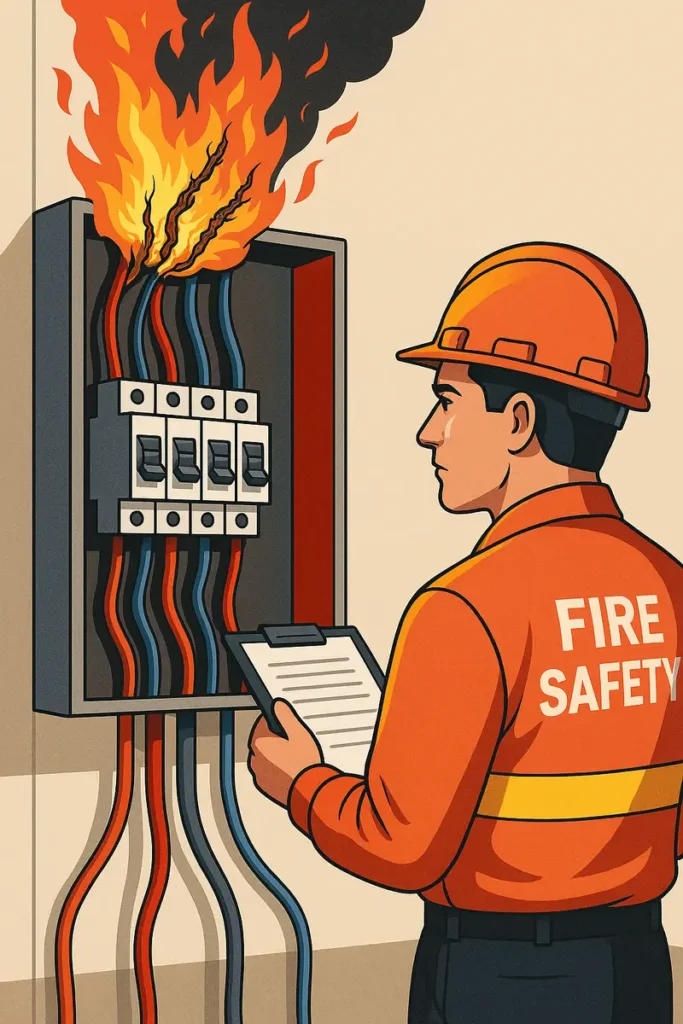
Electrical Fire Safety Explained, Why Electrical Fires Start and How to Stop Them Before Ignition
Electrical fires rarely start with flames. In most cases, they begin silently inside panels, cables, or equipment long before smoke is visible. Site investigations repeatedly show that electrical fires are not sudden accidents. They are the result of ignored warning signs, poor maintenance, and unsafe electrical practices.
According to HSE electrical safety guidance, electrical fires can occur due to faulty wiring, overloading, poor maintenance, and improper use of electrical equipment.
This guide explains electrical fire safety from a real workplace prevention perspective, focusing on why electrical fires actually start, where inspections fail, and how to stop ignition before damage occurs.
Why Electrical Fires Are So Dangerous
Electrical fires differ from other fire types because:
- They often start inside concealed spaces
- They can remain undetected until fully developed
- They involve energized equipment
- They release highly toxic smoke
- They create electrocution and arc flash hazards
By the time flames appear, damage has usually already occurred.
How Electrical Fires Actually Start in Workplaces
Based on audits and incident reviews, electrical fires usually follow a predictable pattern.
Overloaded Circuits and Hidden Heating
Circuits are designed for specific current loads. When overloaded:
- Conductors overheat slowly
- Insulation softens and cracks
- Arcing develops
- Ignition occurs without warning
Common causes
- Multiple appliances on a single socket
- High wattage equipment on domestic wiring
- Extension boards used permanently
Loose Connections, The Silent Ignition Source
Loose electrical joints increase resistance. Increased resistance produces heat.
Frequently observed locations:
- Distribution boards
- MCC panels
- Switchboards
- Motor terminals
- Plug and socket joints
Loose connections can reach ignition temperature without tripping protection devices.
Aged and Deteriorated Wiring
Old wiring loses insulation strength over time.
Risk factors include:
- Brittle insulation
- Rodent damage
- Moisture ingress
- Overheating history
Many fires in older buildings start inside walls or ceilings, making early detection difficult.
Electrical Arcing Inside Panels
Arcing occurs when electricity jumps across gaps.
It generates extreme heat and molten metal particles.
Typical causes:
- Loose terminals
- Cracked insulation
- Dust accumulation
- Faulty breakers
Arcing is one of the most dangerous electrical fire sources.
Poor Quality and Non Certified Equipment
Substandard electrical products often:
- Overheat under normal load
- Fail prematurely
- Have poor contact surfaces
These failures are common in extension cords, plugs, and low cost switchgear.
Warning Signs That Are Commonly Ignored
Electrical fires usually provide early warning signs.
These include:
- Hot switches or sockets
- Burning plastic smell
- Frequent MCB tripping
- Flickering lights
- Discolored outlets
- Crackling or buzzing sounds
Ignoring these signs is one of the leading causes of electrical fire incidents.
How Electrical Fires Spread Once Ignited
After ignition, electrical fires spread rapidly through:
- Cable trays
- Ceiling voids
- Wall conduits
- Panel compartments
PVC cable insulation produces:
- Dense black smoke
- Toxic acidic gases
- Carbon monoxide
Smoke inhalation becomes the primary life safety risk.
Practical Electrical Fire Prevention Measures That Work
Engineering Controls That Reduce Fire Risk
Proper Electrical Design
- Correct cable sizing
- Dedicated circuits for heavy loads
- Proper MCB and RCCB selection
Thermal and Arc Monitoring
- Periodic thermography
- Early detection of hotspots
- Arc fault detection devices where applicable
Panel Ventilation and Cleanliness
- Prevent heat buildup
- Remove dust accumulation
- Maintain enclosure integrity
Maintenance Practices That Prevent Ignition
Regular maintenance is the most effective electrical fire prevention tool.
Key activities:
- Tightening of all electrical connections
- Cleaning of panels and equipment
- Insulation resistance testing
- Replacement of overheated components
Most electrical fires occur in systems that were not inspected regularly.
Safe Electrical Work Practices
- Do not overload sockets
- Avoid permanent extension cord use
- Keep panels closed and labeled
- Maintain clearance around panels
- Use correct fuse and breaker ratings
- Disconnect unused appliances
Fire Protection Systems for Electrical Fire Areas
Electrical fire areas require specific protection.
Portable Fire Extinguishers
- CO₂ extinguishers for panels and equipment
- Clean agent extinguishers for sensitive systems
Water and foam must never be used on live electrical fires.
Fixed Fire Suppression Systems
- Clean agent flooding systems
- CO₂ flooding systems for unmanned rooms
- In rack and under floor suppression
These systems suppress fire without damaging equipment.
How to Respond Safely to an Electrical Fire
If an electrical fire occurs:
- Disconnect power supply if safe
- Use CO₂ or clean agent extinguishers
- Never stand directly in front of panels
- Avoid water or foam
- Evacuate if fire grows
- Call emergency services
Personal safety always takes priority over property.
Electrical Fire Safety Inspection Focus Areas
During inspections, focus on:
- Signs of overheating
- Loose or damaged wiring
- Panel cleanliness
- Proper labeling
- Tripping history
- Equipment ventilation
Inspections that only check documentation do not prevent fires.
Common Real World Failures Seen After Electrical Fires
- Maintenance skipped due to downtime concerns
- Panels left open for cooling
- Temporary wiring made permanent
- Unauthorized modifications
- Incorrect breaker ratings
These issues are repeatedly seen in fire investigation reports.
Who Should Use This Guide
This guide is intended for:
- Facility managers
- Safety officers
- Maintenance supervisors
- Electrical technicians
- Employers responsible for electrical safety
Conclusion
Electrical fires are preventable in most cases. They start due to overloads, loose connections, aged wiring, and ignored warning signs. By focusing on preventive maintenance, proper design, early detection, and safe work practices, electrical fire risk can be significantly reduced.
Electrical fire safety is not about reacting to flames. It is about stopping ignition before it happens.
Types of Fire Extinguishers: Complete Guide to Uses, Classes, Color Codes and Selection
Heat Sources in Industrial Fires: Causes, Risks, Control Measures and Prevention
Water Extinguisher: Uses and Limitations
Electrical Fire Causes: Detailed Explanation, Scientific Background, Risk Factors, and Prevention
Preventing Short-Circuit Fires: Causes, Controls, Protection Devices, and Safety Measures
