
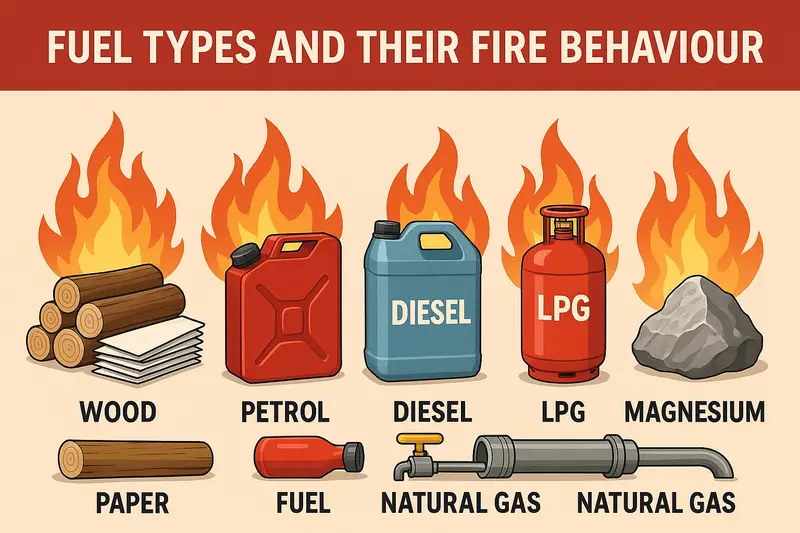
Fuel Types and Their Fire Behaviour, Why Different Fuels Burn Differently and How Fires Escalate
In real fires, fuel type determines how fast a fire starts, how violently it spreads, how much smoke is produced, and whether an incident becomes controllable or catastrophic. Fire investigations consistently show that many fires escalate not because fuel was unknown, but because people misunderstood how that fuel behaves once ignited.
According to HSE fire and explosion guidance, different fuel types such as solids, liquids, and gases behave differently in a fire depending on their physical and chemical properties.
This guide explains fuel types from a practical fire risk perspective, focusing on how different fuels behave during real incidents, where common mistakes occur, and how correct controls prevent escalation.
Why Fuel Behaviour Matters in Fire Safety
Fuel is always present in workplaces, homes, and industrial sites. What changes the severity of a fire is:
- How easily the fuel ignites
- How quickly it releases energy
- Whether it produces flammable vapours
- How it reacts to water or other extinguishing agents
- How much fuel is present in one location
The same ignition source can produce a small controllable fire with one fuel, and a flash fire or explosion with another.
Solid Fuels, Slow to Ignite but Dangerous When Accumulated
Solid fuels include materials such as:
- Wood, paper, cardboard
- Textiles and furnishings
- Rubber and many plastics
- Packaging and insulation materials
How Solid Fuel Fires Develop
Solid fuels do not burn directly. When heated, they release flammable gases that ignite above the surface.
Typical stages include:
- Gradual heating
- Release of flammable vapours
- Flaming combustion
- Hidden smouldering after flames die down
Why Solid Fuel Fires Are Dangerous
- Large amounts of smoke are produced
- Fires can smoulder unseen inside walls, stacks, or furniture
- Structural elements can weaken due to prolonged heating
- Sudden re introduction of air can cause rapid fire growth
Common failure
Large quantities of cardboard, pallets, or waste stored close together with no separation.
Liquid Fuels, Fast Spreading and Difficult to Control
Liquid fuels burn through their vapours, not the liquid itself.
Common examples include:
- Petrol, diesel, kerosene
- Solvents and thinners
- Alcohol based liquids
- Oils and lubricants
Real Fire Behaviour of Liquid Fuels
- Ignition is often rapid
- Fires spread quickly across floors
- Burning liquid can flow into drains and trenches
- Vapours can ignite far from the original spill
Low flash point liquids such as petrol are especially dangerous because they release flammable vapours even at normal temperatures.
Common failure
Using water jets on burning liquids, which spreads the fire instead of controlling it.
Gaseous Fuels, Small Leaks with Big Consequences
Gases mix easily with air and can ignite instantly.
Typical gases include:
- LPG and propane
- Natural gas
- Hydrogen
- Acetylene
How Gas Fires Escalate
- Leaks may go unnoticed
- Gas accumulates in confined or low ventilation areas
- Ignition causes flash fires or explosions
- Pressurized leaks can form intense jet flames
Some gases collect near floors, others near ceilings, which affects where detection and ventilation are needed.
Common failure
Attempting to extinguish a gas flame without first isolating the gas supply.
Metal Fuels, Rare but Extremely Severe
Certain metals become powerful fuels, especially when finely divided.
Examples include:
- Magnesium
- Sodium and potassium
- Aluminium or titanium dust
Behaviour of Metal Fires
- Extremely high temperatures
- Bright, intense flames
- Violent reactions with water or foam
- Molten metal spread
Metal fires are among the most dangerous and are often worsened by incorrect firefighting actions.
Common failure
Using water or CO₂ on metal fires, leading to explosions and splatter.
Fuel Form, Why Size and Shape Matter
Fuel behaviour changes dramatically with form.
- Fine dust ignites much faster than solid blocks
- Thin films of liquid burn more violently than deep pools
- Piles trap heat and promote self heating
This explains why dust explosions, vapour flash fires, and spontaneous combustion occur even when ignition sources seem minor.
How Fuel Quantity Affects Fire Severity
Fuel load refers to how much combustible material is present in one area.
High fuel load leads to:
- Higher temperatures
- Longer burning duration
- Faster fire spread
- Increased risk of flashover
- Structural collapse
Many major fires occur not because materials are highly flammable, but because too much fuel is stored in one place.
Matching Fuel Type with the Right Firefighting Method
Correct extinguishing depends on fuel behaviour, not convenience.
- Solid fuels require cooling
- Liquid fuels require vapour suppression
- Gas fires require isolation first
- Metal fires require special agents only
Using the wrong extinguisher can turn a small fire into a major incident.
Fuel Storage Mistakes That Cause Fires
Across inspections and investigations, the same mistakes appear repeatedly:
- Flammable liquids stored near ignition sources
- Gas cylinders exposed to heat
- Combustible waste allowed to accumulate
- Metal swarf mixed with oil
- Poor ventilation in fuel storage areas
These issues allow fuel hazards to grow silently until ignition occurs.
Practical Fuel Hazard Assessment Questions
When inspecting any site, ask:
- What fuels are present?
- In what form are they stored?
- How much fuel is accumulated?
- Are ignition sources nearby?
- What happens if this fuel ignites?
- Are correct extinguishers available?
- Do people understand how this fuel behaves?
These questions prevent theoretical assessments from becoming meaningless.
Common Misunderstandings About Fuel Behaviour
- “Diesel is safe because it does not ignite easily”
- “Small gas leaks are harmless”
- “Metal fires are rare, so no special planning is needed”
- “Water works on most fires”
These assumptions are responsible for many severe fire incidents.
Who Should Use This Guide
This guide is intended for:
- Safety officers
- Facility and warehouse managers
- Maintenance supervisors
- Fire wardens
- Employers responsible for fire risk control
Conclusion
Fuel type determines how a fire starts, spreads, and escalates. Solid fuels smoulder and generate smoke, liquid fuels spread rapidly, gas fuels explode or flash, and metal fuels burn with extreme intensity. Understanding real fuel behaviour allows better storage decisions, correct extinguisher selection, and realistic fire risk assessments.
Fire safety is not about memorizing classifications. It is about understanding how fuels actually behave when things go wrong.
Fire Triangle Explained: Definition, Elements, Examples and Importance
Heat Sources in Industrial Fires: Causes, Risks, Control Measures and Prevention
Breaking the Fire Triangle: Methods and Applications
Electrical Fire Causes: Detailed Explanation, Scientific Background, Risk Factors, and Prevention
