
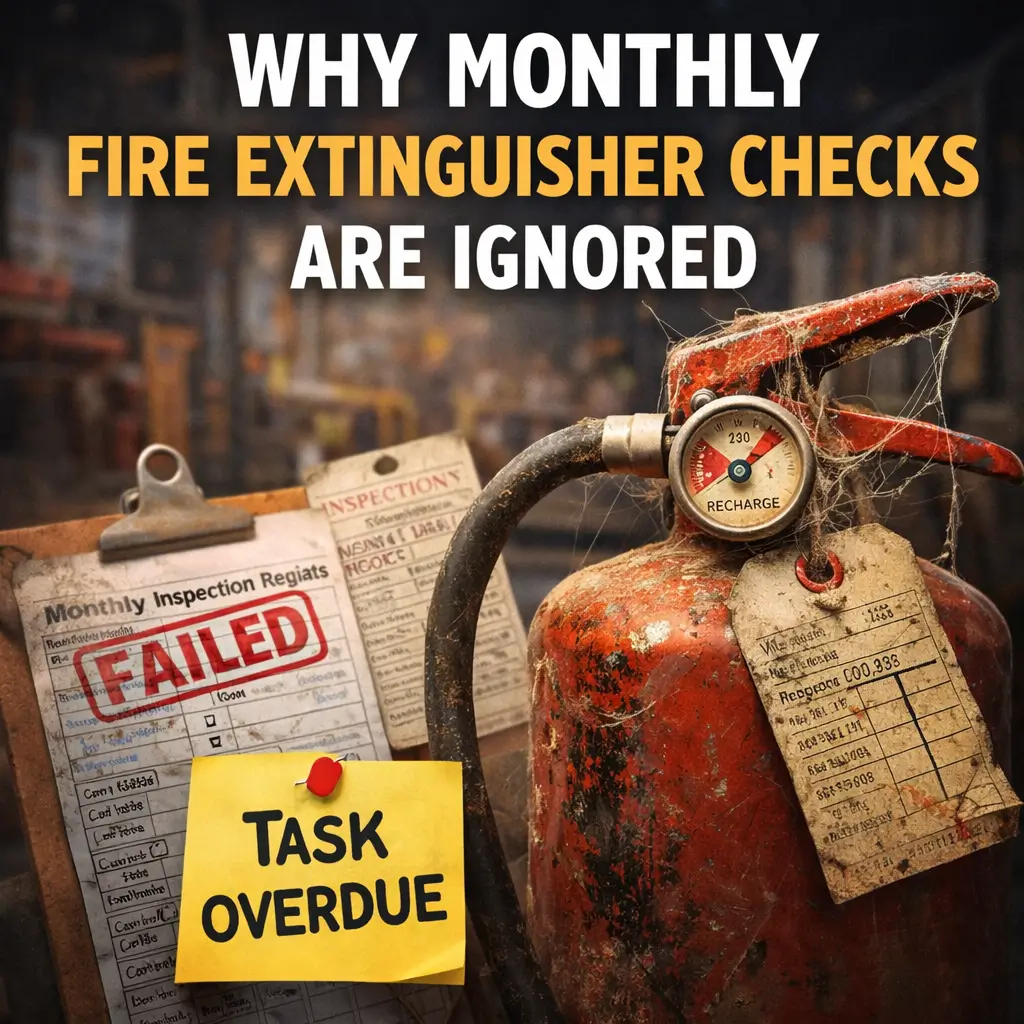
Why Monthly Fire Extinguisher Checks Are Ignored
Fire extinguishers are installed in almost every workplace, yet monthly fire extinguisher inspections are one of the most commonly ignored safety requirements. While organizations proudly display extinguishers on walls, many of them are non-functional when emergencies occur. This gap between installation and readiness is a serious fire safety failure.
For broader public education on fire prevention and safe use of fire protection equipment, internationally recognized fire safety organizations regularly publish guidance for homes and workplaces. Educational resources from the National Fire Protection Association provide practical insights into fire risks, extinguisher readiness, and preventive safety measures that align with global fire safety best practices.
Ignoring monthly fire extinguisher checks does not happen due to lack of rules. It happens due to poor systems, unclear responsibility, and a false sense of security. Understanding why these checks are skipped is essential for preventing equipment failure during real emergencies.
What Are Monthly Fire Extinguisher Checks?
Monthly fire extinguisher checks are visual inspections carried out to ensure that extinguishers are available, accessible, and in working condition. These checks are required by most fire safety standards and local regulations.
A proper monthly check verifies:
- The extinguisher is in its designated location
- Access is not blocked
- Pressure gauge is in the green zone
- Safety pin and tamper seal are intact
- No visible physical damage or leakage
- Inspection tag is updated
Despite being simple and quick, these checks are frequently overlooked.
The Real Reasons Monthly Checks Are Ignored
1. Fire Safety Is Treated as a Paper Requirement
In many workplaces, fire safety inspections exist only on paper. Monthly extinguisher checks are marked as “done” in registers without physically inspecting the equipment. This creates a dangerous illusion of compliance.
When inspections become paperwork instead of physical verification, real risks remain hidden.
2. No Clear Responsibility Assigned
A common issue is that no single person is accountable for monthly fire extinguisher inspections. Safety officers assume maintenance will check them. Maintenance assumes safety will do it. Supervisors assume someone else is responsible.
When responsibility is shared, accountability disappears.
3. Lack of Training and Awareness
Many employees do not know:
- What a pressure gauge indicates
- How a damaged hose affects performance
- Why tamper seals matter
- How often checks must be done
Without proper fire safety training, extinguishers become background objects rather than critical emergency tools.
4. Over-Reliance on Annual Servicing
Organizations often believe that annual servicing by third-party vendors is sufficient. This is a major misconception.
Annual servicing does not replace monthly inspections. An extinguisher can lose pressure, get blocked, or be damaged within weeks after servicing.
5. Poor Safety Culture
When management focuses only on production targets, fire safety inspections are treated as low priority. Over time, this attitude spreads across the organization.
A weak safety culture results in:
- Missed inspections
- Incomplete records
- Non-functional equipment
- Increased fire loss
6. No Follow-Up on Deficiencies
Even when inspections are conducted, issues such as low pressure, missing pins, or blocked access are often not corrected. When employees see that reported issues are ignored, they stop taking inspections seriously.
Consequences of Ignoring Monthly Fire Extinguisher Checks
Ignoring monthly checks leads to serious consequences:
- Extinguishers fail during emergencies
- Small fires grow into major incidents
- Increased injury and property damage
- Legal non-compliance and penalties
- Insurance claim rejection
- Loss of life in worst cases
Most post-fire investigations reveal that extinguishers were present but unusable.
Real-World Observation from Industrial Sites
In many industrial audits, common findings include:
- Pressure gauges in the red zone
- Corroded cylinders
- Missing safety pins
- Extinguishers blocked by stored materials
- Inspection tags filled months in advance
These are not rare cases. They are routine findings, especially where inspections are ignored.
How to Ensure Monthly Checks Are Actually Done
Assign Clear Ownership
Assign monthly extinguisher checks to a specific role, not a department. Accountability improves compliance.
Use Simple Checklists
Short, visual checklists increase consistency and reduce inspection fatigue.
Train Staff Practically
Train employees on what to look for, not just what to tick on paper.
Conduct Random Verification
Management should randomly verify extinguishers on site to ensure inspections are genuine.
Treat Findings Seriously
Correct identified issues immediately to reinforce the importance of inspections.
Frequently Asked Questions (FAQs)
Are monthly fire extinguisher checks mandatory?
Yes. Most fire safety standards and local regulations require monthly visual inspections in addition to annual servicing.
Who should perform monthly extinguisher inspections?
A trained internal person such as a safety officer, supervisor, or designated fire warden should perform them.
What happens if monthly checks are skipped?
Extinguishers may lose pressure, get damaged, or become inaccessible, leading to failure during emergencies.
Can annual servicing replace monthly inspections?
No. Annual servicing does not identify issues that develop between service intervals.
How long does a monthly inspection take?
Typically less than two minutes per extinguisher when done correctly.
Conclusion
Monthly fire extinguisher checks are ignored not because they are difficult, but because organizations underestimate their importance. Fire extinguishers are only effective when they are ready at the moment of need.
Treating inspections as a real safety activity rather than a paperwork exercise can prevent fire escalation, reduce losses, and save lives. The difference between a controlled fire and a disaster often lies in whether a simple monthly check was done or ignored.
Types of Fire Extinguishers Explained, How to Select the Right One for Real Workplace Fires
Water Extinguisher, When It Works, When It Fails, and How People Misuse It
Foam Fire Extinguishers, When They Are the Best Choice and When They Are Dangerous
CO₂ Fire Extinguisher, Where It Works Perfectly and Where It Becomes Dangerous
DCP Fire Extinguisher, Why It Works So Fast and Why It Often Fails After That
