
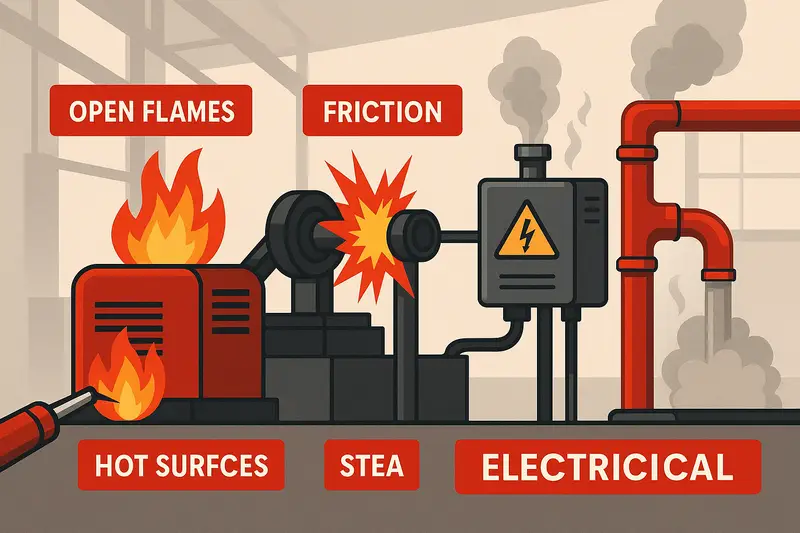
Heat Sources in Industrial Fires: Causes, Risks, Control Measures and Prevention
Industrial fires are among the most serious emergencies in manufacturing plants, refineries, warehouses, power stations, and workshops. In almost every incident, heat is the trigger that takes a normal situation to an ignition event. When heat sources are not identified, controlled, or separated from fuels, the fire triangle is completed and combustion begins.
This guide explains all major industrial heat sources, how heat is generated and transferred, how it leads to ignition, and the practical control measures you can implement. It is written for fire and safety officers, HSE professionals, engineers, supervisors, and students preparing for fire and industrial safety examinations.
According to HSE fire and explosion guidance, uncontrolled heat sources such as hot work, friction, electrical faults, and overheating equipment can act as ignition sources in industrial fires.
Understanding Heat as a Fire Hazard
What is Heat in the Context of Fire?
Heat is a form of energy that raises the temperature of a material. When a material reaches its ignition temperature, its molecules gain enough energy to react with oxygen and start combustion.
Key points in fire safety context:
- Heat is the ignition source.
- Fuel is the combustible material.
- Oxygen is the supporting medium.
If we control heat, we delay or prevent ignition—even if fuel and oxygen are present in the workplace.
Heat and the Fire Triangle
The fire triangle consists of:
- Heat
- Fuel
- Oxygen
Removing or controlling heat is one of the most effective ways to prevent fire. This is the basis of:
- Cooling with water
- Limiting hot work
- Maintaining equipment temperatures within safe limits
- Installing thermal protection and insulation
Industrial Environments with High Heat Risk
Some workplaces naturally contain multiple heat sources:
- Oil and gas facilities
- Chemical plants and refineries
- Metal foundries and forging shops
- Welding and fabrication workshops
- Power plants and electrical substations
- Large warehouses with heaters and machinery
- Paint shops, curing ovens, dryers
In these locations, heat source control must be a dedicated program—not just a general rule.
Major Types of Industrial Heat Sources
Open Flames
Hot Work Operations
Hot work includes:
- Welding
- Gas cutting
- Brazing
- Soldering
- Flame gouging
These activities can generate temperatures above 3,000°C, capable of:
- Igniting flammable vapors
- Setting nearby combustibles on fire
- Starting smoldering fires in hidden areas (e.g., behind panels, inside insulation)
Typical mistakes:
- No fire watch after hot work
- Poor housekeeping around welding area
- Sparks traveling through open grating to lower floors
Industrial Furnaces and Kilns
Foundries, cement plants, glass industries and heat treatment plants use:
- Furnaces
- Kilns
- Reheating ovens
Hazards include:
- Radiant heat igniting nearby materials
- Molten metal splashes
- Hot slag falling onto combustible floors or packaging
Gas Burners and Boilers
Steam boilers, process heaters and gas burners are common in:
- Food industries
- Textile processing
- Chemical plants
Risks:
- Flame roll-out during burner start-up
- Leaks of LPG, natural gas or furnace oil
- Poorly adjusted burners causing incomplete combustion and high flue temperatures
Sparks and Electrical Arcs
Mechanical Sparks
Generated during:
- Grinding
- Cutting
- Chipping
- Drilling
- Metal-to-metal impact
These sparks can:
- Ignite solvent vapors, flammable gases, or combustible dust clouds
- Start smoldering in accumulated lint or dust on ledges and equipment
Typical high-risk areas:
- Fabrication shops
- Maintenance workshops
- Mines and bulk material handling plants
Electrical Sparks and Arcs
Electrical heat sources arise from:
- Loose connections
- Short circuits
- Overloaded panels and cables
- Faulty switches or contactors
- Deteriorated insulation
Dangers:
- Arcing inside panels causing insulation fires
- Ignition of dust layers and dust clouds
- Ignition of vapors around pumps, tanks, or paint booths
Proper electrical maintenance is one of the most effective fire prevention strategies in industry.
Hot Surfaces
Many industrial fires start when a hot surface contacts or radiates heat to nearby combustibles.
Common hot surfaces:
- Motor casings and bearings
- Gearboxes and couplings
- Dryers, ovens, heat exchangers
- Exhaust manifolds and engine surfaces
- Steam lines, hot oil lines and condensate lines
Typical scenarios:
- Cardboard boxes stacked against a hot steam line
- Wooden pallets touching a hot oven wall
- Plastic drums stored too close to engine exhaust
Controlling the surface temperature and maintaining separation distances are critical controls.
Frictional Heat
Friction generates heat when two surfaces rub together.
Conveyors and Transport Systems
- Misaligned rollers
- Seized bearings
- Belt slipping on drive pulleys
Consequences:
- Localized heating
- Sparks
- Ignition of conveyor belts or accumulated dust
Bearings, Shafts and Gear Assemblies
Causes of overheating:
- Poor or no lubrication
- Overloading
- Misalignment
- Contaminated grease
Overheated bearings have caused many fires in:
- Cement plants
- Power plants
- Paper mills
- Textile mills
Braking Systems
Industrial vehicles and machines use brakes that convert kinetic energy to heat.
- Overuse on slopes
- Mechanical faults
- Sticking brake shoes
These can ignite:
- Oil residues
- Rubber tyres
- Nearby packaging materials
Chemical Heat Sources
Exothermic Chemical Reactions
Some reactions release significant heat:
- Polymerization reactions
- Oxidation reactions
- Neutralization in chemical processes
If the heat is not removed:
- Reactors can overheat
- Vapors can reach ignition temperature
- Pressure build-up can cause explosions
Self-Heating and Spontaneous Combustion
Certain materials generate heat slowly over time:
- Oily cotton rags
- Coal piles
- Biomass, hay, or compost
- Some metal powders
Mechanism:
- Slow oxidation generates heat
- Poor ventilation prevents heat dissipation
- Temperature rises until ignition occurs
Result: Spontaneous combustion without any external flame or spark.
Steam, Hot Fluids and Process Heating
Steam Lines and Leaks
- High-temperature steam leaks can heat nearby materials
- Condensate lines may remain hot for long periods
- Lagging (insulation) soaked with oil can ignite when heated
Hot Oil and Thermal Fluid Systems
Used in:
- Textile dryers
- Lamination plants
- Chemical reactors
Risks:
- Oil leaks onto hot surfaces
- Over-temperature due to control failure
- Fires in heater compartments or near flanges
Heat Exchangers
Leaks on the hot side can:
- Spray hot fluid onto combustible surfaces
- Raise surface temperatures beyond safe limits
Heat from Electricity
Overloaded Circuits and Cables
When current exceeds design rating:
- Conductors overheat
- Insulation softens and fails
- Hot spots appear at terminations
Transformers, Motors and Panels
All electrical equipment generates heat under load. Poor conditions increase risk:
- Blocked ventilation grills
- Dust accumulation
- Loose terminations
- Undersized cables
Thermographic inspection often reveals these as hotspots before fire occurs.
Heat Transfer in Industrial Fires
Understanding how heat moves is essential to predict fire spread.
Conduction
Heat transfer through solids.
Examples:
- Hot bearings warming up connected steel structures
- Fire in a furnace transferring heat along beams to roof elements
Control:
- Insulating hot surfaces
- Using thermal breaks
- Avoiding direct contact between hot equipment and combustibles
Convection
Heat transfer by moving fluids (air or liquids).
Examples:
- Hot air rising from a furnace carrying flames and embers
- Heated smoke layers accumulating under ceilings
Control:
- Good ventilation design
- Smoke control systems
- Keeping combustibles away from hot air outlets
Radiation
Heat transfer via electromagnetic waves.
Examples:
- Radiant heat from furnaces or flames igniting materials several meters away
- Sunlight through glass increasing interior temperatures in storage areas
Control:
- Radiant heat shields
- Adequate separation distances
- Reflective barriers
Materials Sensitive to Heat Ignition
Certain materials ignite at relatively low temperatures or when exposed to persistent heating.
- Flammable liquids with low flash point (e.g., petrol, solvents)
- Combustible dusts (e.g., flour, coal dust, metal dust)
- Packaging materials (e.g., cardboard, foam, films)
- Insulation materials soaked in oil or chemicals
Understanding each material’s flash point, auto-ignition temperature and thermal stability helps set safe temperature limits and distances.
Control Measures for Industrial Heat Sources
Engineering Controls
Temperature Monitoring and Alarms
- Install temperature sensors on:
- Bearings
- Motors
- Ovens
- Reactors
- Use alarm systems when temperature exceeds safe limits.
Thermal Insulation and Shields
- Insulate steam and hot oil lines
- Use guard plates around exhausts
- Add fire-resistant barriers between hot equipment and storage areas
Explosion-Proof and Flameproof Equipment
In flammable atmospheres:
- Use flameproof motors, switches and junction boxes
- Use intrinsically safe circuits for instrumentation
Automatic Shut-off and Interlocks
- High-temperature trips on heaters and reactors
- Interlocks that stop conveyors when bearings overheat
- Burner management systems on boilers
Administrative Controls
Hot Work Permit System
A robust hot work permit should include:
- Hazard identification at the job site
- Removal or protection of combustibles
- Gas testing in confined spaces or process areas
- Fire watch during hot work and for a defined period after completion
- Approval from authorized person
Preventive Maintenance Program
- Regular lubrication of bearings and moving parts
- Tightening of electrical terminations
- Cleaning dust and lint from motors and panels
- Checking burner flame quality and fuel-air ratios
Thermographic Surveys
Use thermal imaging to detect:
- Overheating cables and terminations
- Hot bearings and rollers
- Abnormally hot surfaces in panels or MCCs
Safe Work Practices
- Maintain clearance between hot equipment and stored materials
- Never leave running heaters, ovens or hot work unattended
- Keep flammable liquids in approved cabinets, away from heat sources
- Enforce PPE and safe distances around furnaces and open flames
Fire Protection Systems Around Heat Sources
- Heat detectors in electrical and mechanical rooms
- Automatic sprinklers above high-risk processes
- Hose reels and hydrants near hot work and furnace areas
- Appropriate fire extinguishers (water, foam, CO₂, DCP) based on fuel type
Inspection and Monitoring Checklist for Heat Hazards
Regular inspections should verify:
- No combustible storage near furnaces, boilers, or steam lines
- Motors and bearings are running within normal temperature range
- No discoloration or burning smell from electrical panels
- Hot work areas are controlled by permits and fire watch
- Oily rags are stored in metal self-closing containers
- No unprotected hot surfaces in walkways or storage areas
FAQs on Heat Sources in Industrial Fires
What is the most common heat source behind industrial fires?
There is rarely a single “most common” source across all industries, but electrical overheating and hot work (welding, cutting, grinding) consistently rank among the top causes. Loose electrical connections, overloaded panels, and unpermitted hot work near combustibles are frequent contributors.
Why are bearings and conveyors such a big fire risk?
Bearings, rollers and conveyor systems can overheat due to:
- Lack of lubrication
- Misalignment
- Overloading
- Dust buildup
This frictional heat can ignite:
- Rubber conveyor belts
- Accumulated dust layers
- Nearby packaging materials
Routine lubrication, alignment checks, and thermography greatly reduce this risk.
How do I know if a hot surface is too hot for nearby materials?
You should compare:
- The surface temperature of the equipment
- The ignition temperature or safe operating temperature of nearby materials
As a simple rule of thumb in daily practice:
- If it is “too hot to touch” (over ~60°C), it should not directly contact combustible materials.
- For high-risk materials (solvents, dust, foam, plastics), follow manufacturer data sheets and standards for minimum separation distances and shielding.
Are all sparks dangerous, or only electrical ones?
Both mechanical sparks and electrical arcs can ignite flammable atmospheres or dust clouds:
- Mechanical sparks from grinding or impact can ignite vapors and dust.
- Electrical arcs from faulty wiring or switching can easily ignite gases, solvent vapors and dust layers.
Any type of spark in a flammable atmosphere or dusty environment must be treated as dangerous.
How can we control heat-related fire risks from hot work?
Key controls include:
- A formal hot work permit system
- Cleaning and removing combustibles in the work area
- Shielding or covering items that cannot be removed
- Continuous fire watch during the job and after completion (often 30–60 minutes or more)
- Gas testing in confined spaces or process areas
Training workers to recognize how far sparks can travel (often 10–15 m or more) is also critical.
What is spontaneous combustion and where is it likely to occur?
Spontaneous combustion occurs when a material self-heats internally due to slow oxidation or chemical reactions until it reaches ignition temperature without any external spark or flame.
Common examples:
- Oily cotton rags in a pile
- Coal heaps or coke piles
- Hay and biomass stacks
- Certain metal powders
These must be stored in ventilated areas, in metal containers with tight lids, and disposed of properly.
How often should we check for heat-related hazards in an industrial plant?
Good practice includes:
- Daily operator checks for abnormal smells, noises or temperatures
- Weekly inspections of high-risk areas (boilers, furnaces, paint shops, hot work zones)
- Monthly thermographic checks of critical electrical panels and rotating equipment
- Annual comprehensive fire risk assessment and audit
Frequency can be increased for high-risk processes or problematic areas.
Which fire extinguisher should be used for heat-related fires in machinery and panels?
The extinguisher choice depends on the fuel involved, not the heat source alone:
- Electrical panels and energized equipment: CO₂ or clean agent
- Oil and solvent fires: Foam or DCP (for small spills)
- Ordinary combustibles (wood, cardboard, cloth): Water or ABC powder
Always isolate power and fuel where possible before or immediately after extinguishing.
Conclusion
Heat is at the center of almost every industrial fire. Whether it comes from open flames, electrical faults, hot surfaces, friction, chemical reactions, or process heating, uncontrolled heat near fuel and oxygen completes the fire triangle and triggers ignition.
By:
- Understanding each type of industrial heat source
- Recognizing how heat is transferred and intensified
- Implementing strong engineering controls and hot work systems
- Maintaining equipment and monitoring temperatures
- Training workers to recognize and report heat hazards
industries can significantly reduce the risk of catastrophic fires.
Effective fire prevention is not only about installing extinguishers and hydrants—it begins much earlier, with identifying and controlling heat sources before they ever meet fuel and oxygen.
Fire Triangle Explained: Definition, Elements, Examples and Importance
Electrical Fire Safety: Causes, Controls, and Prevention Measures