Breaking the Fire Triangle, How Fires Are Actually Stopped in Real Situations
In real fire incidents, fires are not extinguished by theory. They are stopped by quick decisions that remove heat, cut off fuel, or control oxygen. Fire investigations repeatedly show that fires escalate not because the fire triangle was unknown, but because people failed to break it in time or used the wrong method.
According to HSE fire and explosion guidance, fires can be controlled or extinguished by removing heat, fuel, or oxygen from the combustion process.
This guide explains how the fire triangle is broken in real workplaces, buildings, and emergency situations, focusing on what works, what fails, and how correct actions stop fires before they grow out of control.
Why Breaking the Fire Triangle Matters in Practice
A fire exists only when:
- Heat is present
- Fuel is available
- Oxygen supports combustion
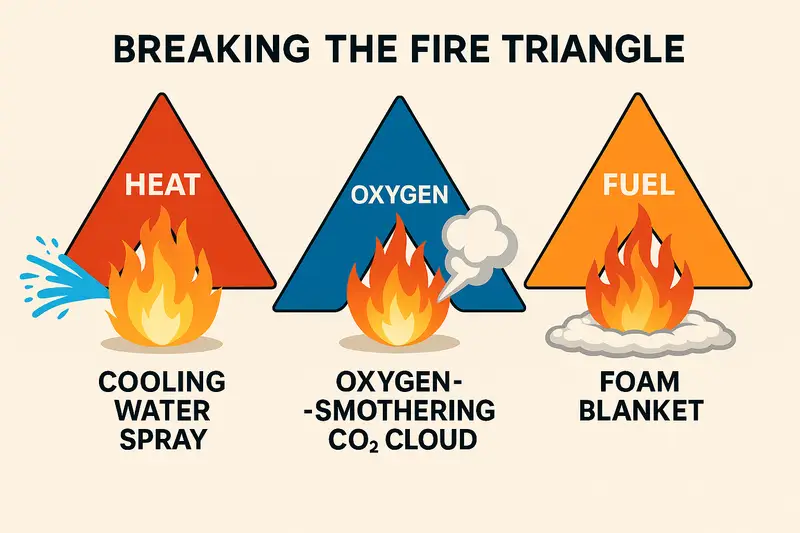
Removing any one of these elements stops the fire. The challenge in real incidents is choosing which element can be removed fastest and safest.
Many fires grow because people:
- Choose the wrong extinguisher
- Delay fuel isolation
- Feed the fire with oxygen unintentionally
- Attempt cooling where smothering is needed, or vice versa
Removing Heat, The Most Common and Effective Method
How Cooling Stops Fire Growth
Cooling works by lowering the temperature of the burning material so it cannot continue producing flammable vapours.
In real incidents, cooling:
- Stops flame spread
- Prevents re ignition
- Protects nearby materials from ignition
Where Cooling Works Best
Cooling is most effective for:
- Ordinary combustibles like wood, paper, cloth
- Furniture and furnishings
- Structural fires
- Overheated machinery
Common Cooling Failures
Cooling fails when:
- Water is used on flammable liquids
- Electrical equipment is still energized
- Metal fires are involved
Using water incorrectly often spreads fire or creates new hazards.
Removing Oxygen, Smothering the Fire Safely
How Smothering Works in Real Fires
Smothering stops fire by preventing oxygen from reaching the flames.
Common smothering methods include:
- Foam blankets on liquid fires
- CO₂ on electrical equipment
- Fire blankets on small fires
- Closing doors to limit air flow
Where Smothering Is Most Effective
Smothering works best for:
- Flammable liquid spills
- Electrical cabinets and panels
- Confined spaces
- Small localized fires
Common Smothering Mistakes
Smothering often fails when:
- Foam is broken by poor application
- CO₂ is used outdoors
- Doors and windows are left open, feeding oxygen
Removing Fuel, The Fastest Way to Stop Some Fires
Why Fuel Removal Is Critical
Some fires stop instantly when fuel is removed.
Examples include:
- Closing gas cylinder valves
- Isolating fuel pumps
- Stopping conveyors carrying burning materials
- Removing burning stock from the fire area
Real World Fuel Isolation Challenges
Fuel removal is often delayed because:
- Valves are inaccessible
- Operators are not trained
- Panic prevents safe approach
- Fuel sources are fixed in place
Fuel isolation planning must be done before an emergency occurs.
Choosing the Right Method Under Pressure
In real situations, the key question is:
Which side of the fire triangle can I break safely right now?
- Solid materials burning → Cooling is usually best
- Liquid fuels burning → Smothering or fuel isolation
- Gas fires → Fuel isolation first
- Electrical fires → Oxygen displacement and power isolation
Choosing the wrong method wastes precious time.
How Firefighting Equipment Breaks the Triangle
Fire extinguishers are designed for specific actions:
- Water based systems remove heat
- Foam removes oxygen and suppresses vapours
- CO₂ displaces oxygen
- Dry powder interrupts flame chemistry and smothers
Understanding this prevents misuse of extinguishers.
How Fires Escalate When the Triangle Is Not Broken
Investigations often show the same failures:
- Water used on fuel fires
- Gas fires extinguished before valves were closed
- Doors opened suddenly, feeding oxygen
- Cooling attempted without stopping fuel flow
These mistakes allow small fires to become major incidents.
Breaking the Fire Triangle in Different Environments
Buildings and Workplaces
- Fire doors limit oxygen
- Sprinklers cool and suppress
- Fuel storage limits fire load
Industrial Facilities
- Emergency shutoff valves remove fuel
- Foam systems suppress vapours
- Cooling protects tanks and structures
Kitchens
- Wet chemical extinguishers cool and smother hot oils
- Lids and fire blankets limit oxygen
Inspection Focus Areas That Prevent Fire Growth
Effective inspections ensure:
- Correct extinguishers are installed
- Fuel isolation valves are accessible
- Fire doors close properly
- Ventilation does not feed fire unintentionally
- Staff know when not to fight fire
Prevention is easier than emergency response.
Who Should Use This Guide
This guide is intended for:
- Safety officers
- Fire wardens
- Facility managers
- Maintenance supervisors
- Anyone responsible for emergency response planning
Conclusion
Breaking the fire triangle is not a classroom concept. It is a real time decision making process that determines whether a fire is stopped early or becomes uncontrollable. Fires are extinguished by removing heat, isolating fuel, or controlling oxygen. The correct method depends on the situation, the fuel involved, and the risks to people.
Effective fire safety is not about memorizing theory. It is about knowing how to break the fire triangle safely when it matters most.
Fire Triangle Explained: Definition, Elements, Examples and Importance
Heat Sources in Industrial Fires: Causes, Risks, Control Measures and Prevention
